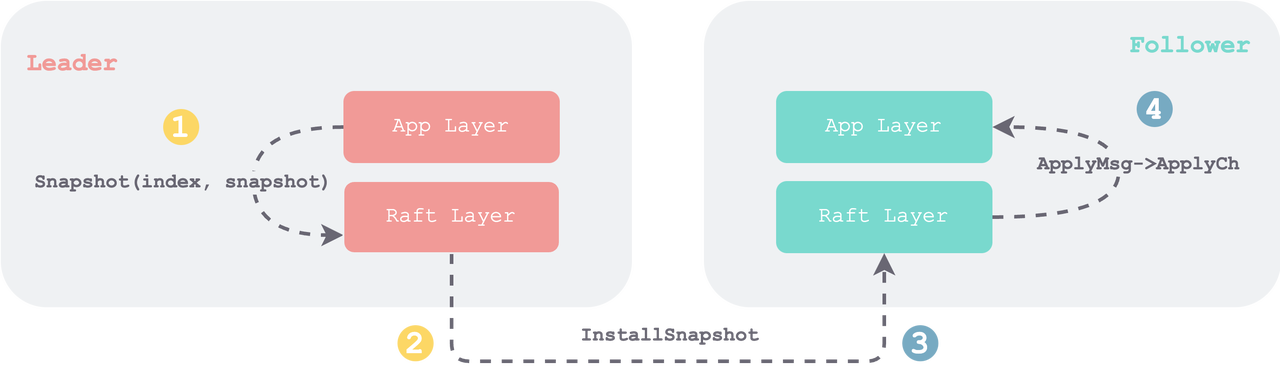
本节我们要实现 InstallSnapshot 相关 RPC 。为了避免丢三落四,我们遵循一条 snapshot 数据流主线,来分四个步骤,一步步实现:

  1. Leader 的应用层调用 raft.Snapshot(index, snapshot) 函数
    1. 保存 snapshot
    2. 截断日志
    3. 持久化
  2. Leader 在需要时使用该 snapshot 构造参数发送 RPC 给 Follower
  3. Follower 接收到 Leader RPC 后替换本地日志,并将其持久化
  4. Follower 通过 ApplyMsg 将 snapshot 传给 Follower 应用层

19-1

和之前一样,为了保持模块的内聚性,我们新建一个文件raft_compaction.goSnapshot() 接口和 InstallSnapshot 相关 RPC 都放在一块。

调用 Snapshot() 接口

Leader 的应用层调用 Snapshot(index, snapshot) 接口后,我们会在 index 处截断现有日志,将 snapshot 保存在 rf.log 中,同时将其持久化,以应对可能得宕机重启。

这里需要说明的是,我们将 RafLog 中:

  1. 应用层(包括 Leader 和 Follower)主动做 snapshot 的接口称为 RaftLog.doSnapshot
  2. 将 Follower 收到 RPC 后被动做 snapshot 的接口称为:RaftLog.installSnapshot
1
2
3
4
5
6
7
8
// --- raft_compaction.go
func (rf *Raft) Snapshot(index int, snapshot []byte) {
// Your code here (PartD).
rf.mu.Lock()
defer rf.mu.Unlock()
rf.log.doSnapshot(index, snapshot)
rf.persistLocked()
}

在上一节,我们没有对 snapshot 字段持久化,本节,我们在 rf.persistLocked() 接口中,需要对其进行持久化。和其他字段不同,snapshot 需要使用 rf.persister.Save 接口的第二个参数来持久化。

1
2
3
4
5
6
7
8
9
10
// --- raft_persistence.go
func (rf *Raft) persistLocked() {
w := new(bytes.Buffer)
e := labgob.NewEncoder(w)
e.Encode(rf.currentTerm)
e.Encode(rf.votedFor)
rf.log.persist(e)
raftstate := w.Bytes()
rf.persister.Save(raftstate, rf.log.snapshot)
}

发送 InstallSnapshot

当 Leader 试图给 Follower 同步日志时,如果发现要携带的 AppendEntriesArgs.Entries 有部分已经被截断了,则需要先发送 Snapshot 。

这里有个边界条件——AppendEntriesArgs.PrevLogIndex 等于 RaftLog.snapLastIdx 时。由于我们上一节在 RaftLog.snapLastIdx 处 mock 了一个携带 snapLastTerm 的假的日志条目,此条件下并不需要发送 Snapshot。

因此,需要发送 Snapshot 的条件是:AppendEntriesArgs.PrevLogIndex < rf.log.snapLastIdx

1
2
3
4
5
6
7
8
9
10
11
12
13
14
15
16
17
18
19
20
21
22
23
24
25
26
27
28
29
30
31
32
33
34
35
36
37
38
39
40
41
42
43
44
45
46
47
48
49
50
51
52
53
54
55
56
57
58
59
60
61
62
63
64
65
66
67
68
69
70
71
72
73
74
75
76
77
78
// --- raft_replication.go
// only valid in the given `term`
func (rf *Raft) startReplication(term int) bool {
replicateToPeer := func(peer int, args *AppendEntriesArgs) {
reply := &AppendEntriesReply{}
ok := rf.sendAppendEntries(peer, args, reply)

rf.mu.Lock()
defer rf.mu.Unlock()
// --- some codes omitted

// align the term
// --- some codes omitted

// check context lost
// --- some codes omitted

// hanle the reply
// probe the lower index if the prevLog not matched
if !reply.Success {
// --- some codes omitted

// LogEntry in `nextPrevIdx` may be truncated
// so we should check it separately
nextPrevIdx := rf.nextIndex[peer] - 1
nextPrevTerm := InvalidTerm
if nextPrevIdx >= rf.log.snapLastIdx {
nextPrevTerm = rf.log.at(nextPrevIdx).Term
}
LOG(rf.me, rf.currentTerm, DLog, "-> S%d, Not matched at Prev=[%d]T%d, Try next Prev=[%d]T%d",
peer, args.PrevLogIndex, args.PrevLogTerm, nextPrevIdx, nextPrevTerm)
LOG(rf.me, rf.currentTerm, DDebug, "-> S%d, Leader log=%v", peer, rf.log.String())
return
}

// update match/next index if log appended successfully
rf.matchIndex[peer] = args.PrevLogIndex + len(args.Entries) // important
rf.nextIndex[peer] = rf.matchIndex[peer] + 1

// update the commitIndex
// --- some codes omitted
}

rf.mu.Lock()
defer rf.mu.Unlock()

if rf.contextLostLocked(Leader, term) {
LOG(rf.me, rf.currentTerm, DLog, "Lost Leader[%d] to %s[T%d]", term, rf.role, rf.currentTerm)
return false
}

for peer := 0; peer < len(rf.peers); peer++ {
// --- some codes omitted

prevIdx := rf.nextIndex[peer] - 1
if prevIdx < rf.log.snapLastIdx {
args := &InstallSnapshotArgs{
Term: rf.currentTerm,
LeaderId: rf.me,
LastIncludedIndex: rf.log.snapLastIdx,
LastIncludedTerm: rf.log.snapLastTerm,
Snapshot: rf.log.snapshot,
}
LOG(rf.me, rf.currentTerm, DDebug, "-> S%d, InstallSnap, Args=%v", peer, args.String())
go rf.installOnPeer(peer, term, args)
continue
}

prevTerm := rf.log.at(prevIdx).Term
args := &AppendEntriesArgs{
// --- some codes omitted
}
LOG(rf.me, rf.currentTerm, DDebug, "-> S%d, Append, Args=%v", peer, args.String())
go replicateToPeer(peer, args)
}

return true
}

然后是在 raft_compaction.go 中定义 InstallSnapshot RPC 相关结构体,并发送 RPC。

1
2
3
4
5
6
7
8
9
10
11
12
13
14
15
16
17
18
19
20
21
22
23
24
25
26
27
28
29
30
31
32
33
34
35
36
37
38
39
40
41
42
43
44
45
46
47
48
49
50
51
52
53
54
// --- raft_compaction.go
type InstallSnapshotArgs struct {
Term int
LeaderId int

LastIncludedIndex int
LastIncludedTerm int

Snapshot []byte
}

func (args *InstallSnapshotArgs) String() string {
return fmt.Sprintf("Leader-%d, T%d, Last: [%d]T%d", args.LeaderId, args.Term, args.LastIncludedIndex, args.LastIncludedTerm)
}

type InstallSnapshotReply struct {
Term int
}

func (reply *InstallSnapshotReply) String() string {
return fmt.Sprintf("T%d", reply.Term)
}

func (rf *Raft) sendInstallSnapshot(server int, args *InstallSnapshotArgs, reply *InstallSnapshotReply) bool {
ok := rf.peers[server].Call("Raft.InstallSnapshot", args, reply)
return ok
}

func (rf *Raft) installOnPeer(peer, term int, args *InstallSnapshotArgs) {
reply := &InstallSnapshotReply{}
ok := rf.sendInstallSnapshot(peer, args, reply)

rf.mu.Lock()
defer rf.mu.Unlock()
if !ok {
LOG(rf.me, rf.currentTerm, DSnap, "-> S%d, Lost or crashed", peer)
return
}
LOG(rf.me, rf.currentTerm, DDebug, "-> S%d, InstallSnap, Reply=%v", peer, reply.String())

// align the term
if reply.Term > rf.currentTerm {
rf.becomeFollowerLocked(reply.Term)
return
}
// update the match and next
if args.LastIncludedIndex > rf.matchIndex[peer] { // to avoid disorder reply
rf.matchIndex[peer] = args.LastIncludedIndex
rf.nextIndex[peer] = args.LastIncludedIndex + 1
}

// note: we need not try to update the commitIndex again,
// because the snapshot included indexes are all committed
}

需要注意的是上面代码中的标红部分,注意点有二:

  1. 记得更新:在处理 InstallSnapshotReply 时,很容易忘了更新 matchIndexnextIndex,这会造成不断重复发 InstallSnapshot RPC。
  2. 条件更新:主要为了处理 RPC Reply 乱序返回的情况。仅仅在 args.LastIncludedIndex > rf.matchIndex[peer] 才更新,这是因为,如果有多个 InstallSnapshotReply 乱序回来,且较小的 args.LastIncludedIndex 后回来的话,如果不加判断,会造成matchIndexnextIndex 的反复横跳。

接受 InstallSnapshot

Follower 在收到 InstallSnapshot 时,还是要首先对齐 Term。之后,要判断该 Snapshot 是否有必要接受:如果本地已经有 Snapshot,且其下标已经包含 args.LastIncludedIndex ,则拒绝即可。见下面代码中标红部分。

1
2
3
4
5
6
7
8
9
10
11
12
13
14
15
16
17
18
19
20
21
22
23
24
25
26
27
// --- raft_compaction.go
func (rf *Raft) InstallSnapshot(args *InstallSnapshotArgs, reply *InstallSnapshotReply) {
rf.mu.Lock()
defer rf.mu.Unlock()
LOG(rf.me, rf.currentTerm, DDebug, "<- S%d, RecvSnap, Args=%v", args.LeaderId, args.String())

reply.Term = rf.currentTerm
// align the term
if args.Term < rf.currentTerm {
LOG(rf.me, rf.currentTerm, DSnap, "<- S%d, Reject Snap, Higher Term, T%d>T%d", args.LeaderId, rf.currentTerm, args.Term)
return
}
if args.Term > rf.currentTerm {
rf.becomeFollowerLocked(args.Term)
}

// check if it is a RPC which is out of order
if rf.log.snapLastIdx >= args.LastIncludedIndex {
LOG(rf.me, rf.currentTerm, DSnap, "<- S%d, Reject Snap, Already installed, Last: %d>=%d", args.LeaderId, rf.log.snapLastIdx, args.LastIncludedIndex)
return
}
// install the snapshot
rf.log.installSnapshot(args.LastIncludedIndex, args.LastIncludedTerm, args.Snapshot)
rf.persistLocked()
rf.snapPending = true
rf.applyCond.Signal()
}

在 Follower InstallSnapshot 到 Raft 层时,需要做两件事:

  1. 利用该 snapshot 重置 rf.loginstallSnapshot
  2. 对该 snapshot 进行持久化,以供宕机重启后载入:rf.persistLocked()

两者顺序不能颠倒,因为 rf.persistLocked() 时需要用到 rf.log 中的新保存的 snapshot,这算个隐式依赖,其实风格不太好,在工程实践中尽量避免,或者增加一些详细注释。

1
2
3
4
5
6
7
8
9
10
11
12
13
14
15
// --- raft_log.go
// isntall snapshot from the leader to the follower
func (rl *RaftLog) installSnapshot(index, term int, snapshot []byte) {
rl.snapLastIdx = index
rl.snapLastTerm = term
rl.snapshot = snapshot

// make a new log array
// just discard all the local log, and use the leader's snapshot
newLog := make([]LogEntry, 0, 1)
newLog = append(newLog, LogEntry{
Term: rl.snapLastTerm,
})
rl.tailLog = newLog
}
Follower 将 snapshot 保存到rf.log 中时,完全覆盖掉以前日志就可以。因为新来的 snapshot 的最后一条日志下标( lastIncludeIndex )一定是大于原来 Follower log 的最后一条 index 的(即 Leader 发过来的 snapshot 肯定包含更多信息),否则 Leader 就不需要发送 snapshot 给 Follower 了。

应用 snapshot

当 Follower 在 Raft 层持久化以后,还要通过 rf.applyCh 发送到应用层进行 apply。为了保证所有的 apply 串行执行,我们将所有的 apply 逻辑都收束到 applicationTicker 线程中。

为此,我们在 Raft 结构体中新引入一个标记变量 snapPending,当 Follower 收到 snapshot 时,就设置该标记,并且通过 rf.applyCond 唤醒 applicationTicker 进行 apply。

1
2
3
4
5
6
7
8
9
10
11
12
13
14
15
16
17
18
19
20
21
22
23
24
25
26
27
28
29
30
31
32
33
34
35
36
37
38
39
40
41
42
43
44
45
46
47
// --- raft_application.go 
func (rf *Raft) applicationTicker() {
for !rf.killed() {
rf.mu.Lock()
rf.applyCond.Wait()
entries := make([]LogEntry, 0)
snapPendingInstall := rf.snapPending

if !snapPendingInstall {
for i := rf.lastApplied + 1; i <= rf.commitIndex; i++ {
entries = append(entries, rf.log.at(i))
}
}
rf.mu.Unlock()

if !snapPendingInstall {
for i, entry := range entries {
rf.applyCh <- ApplyMsg{
CommandValid: entry.CommandValid,
Command: entry.Command,
CommandIndex: rf.lastApplied + 1 + i, // must be cautious
}
}
} else {
rf.applyCh <- ApplyMsg{
SnapshotValid: true,
Snapshot: rf.log.snapshot,
SnapshotIndex: rf.log.snapLastIdx,
SnapshotTerm: rf.log.snapLastTerm,
}
}

rf.mu.Lock()
if !snapPendingInstall {
LOG(rf.me, rf.currentTerm, DApply, "Apply log for [%d, %d]", rf.lastApplied+1, rf.lastApplied+len(entries))
rf.lastApplied += len(entries)
} else {
LOG(rf.me, rf.currentTerm, DApply, "Install Snapshot for [0, %d]", rf.log.snapLastIdx)
rf.lastApplied = rf.log.snapLastIdx
if rf.commitIndex < rf.lastApplied {
rf.commitIndex = rf.lastApplied
}
rf.snapPending = false
}
rf.mu.Unlock()
}
}

由于 applicationTicker 原来的逻辑是三段式的:

  1. 临界区(加锁)内,提取要 apply 的数据
  2. 临界区外,通过 channel 进行 apply
  3. 临界区内,更新相关变量

我们新增的 apply snapshot 逻辑也保持这样的三段式,分别增加一段逻辑,并通过 snapPending 进行区分,本次 apply 是 apply log 还是 apply snapshot。

如上述代码标红部分,需要注意的是 apply 了 snapshot 之后,要:

  1. 更新 commitIndexlastApplied :避免 apply 到和 snapshot 有交叠的日志
  2. 清除 snapPending 标记位:避免重复 apply snapshot